Rising cooling demands are placing a strain on buildings, industry, and public power grids. ENERGY TOWERS’ patented technology is designed to make clean, baseload-capable energy available directly on-site—regardless of wind, sun, or weather.
Michelstadt, July 1, 2026 – Heat waves are changing the demands on the energy supply. In offices, residential buildings, production facilities, and modern neighborhoods, the demand for cooling is rising significantly. What provides relief in the short term can become a problem in the long term: The more air conditioners and cooling systems operate at high temperatures, the more electricity demand increases—especially at times when public grids are already under strain.
ENERGY TOWERS sees this as one of the key infrastructure challenges of the coming years: How can the growing energy demand for cooling, industry, and buildings be met without slowing down the energy transition or creating additional dependence on the public power grid?
“We must not address climate adaptation with energy systems that create new dependencies,” says Stephan Ballweg, CEO of ENERGY TOWERS. “As cooling, production, and modern building technology require more and more electricity, we need an energy supply that is clean, decentralized, and capable of meeting base load demand. This is exactly where ENERGY TOWERS comes in.”
Weather-independent energy conversion right on site
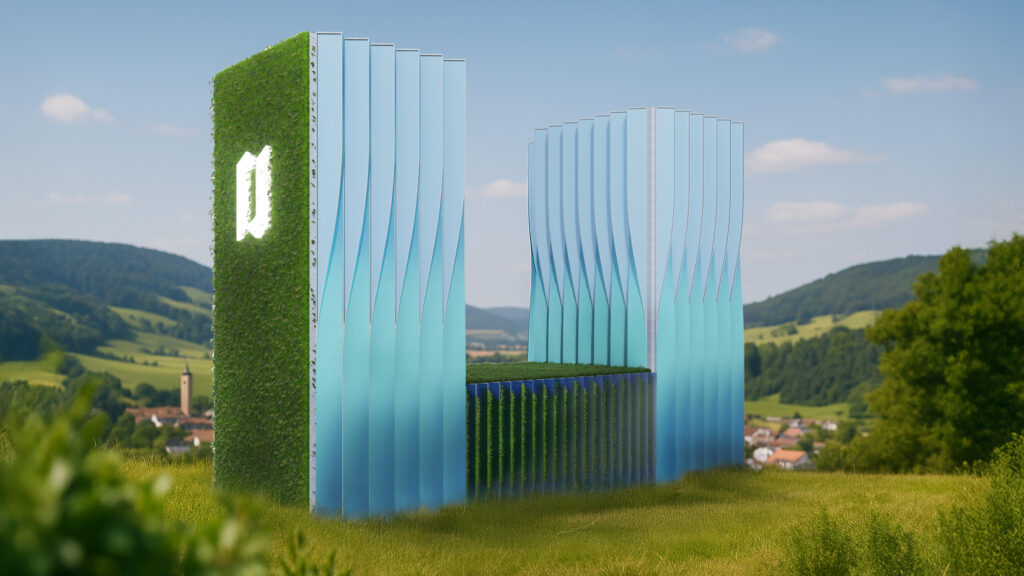
ENERGY TOWERS’ patented technology utilizes the physical principles of buoyancy, gravity, and circulation mechanics in closed, vertical chambers. According to the company, the process is independent of weather conditions and requires no fossil fuels. As a result, an ENERGY TOWERS plant can achieve up to 8,000 full-load hours per year.
The key difference from many renewable energy sources lies in its continuity: While wind and solar energy are heavily dependent on weather, time of day, and location, ENERGY TOWERS’ technology is designed for reliable, predictable energy conversion. This makes it particularly suitable for applications where security of supply plays a central role—such as in industrial areas, commercial properties, data centers, new residential developments, or energy-intensive building complexes.
Waste Heat as an Additional Efficiency Lever
Especially in the summer, many industrial processes generate waste heat that has often gone unused until now. ENERGY TOWERS can use this heat as initial energy to more efficiently support the physical buoyancy process within the tower. This allows existing energy within the system to be harnessed rather than being released unused into the environment.
“Summer heat isn’t just a comfort issue. It’s becoming an economic and infrastructural factor,” explains Ballweg. “In the future, companies, project developers, and municipalities must consider energy self-sufficiency from the very beginning—not just when grid connections, operating costs, or supply security become bottlenecks.”
Relevance for New Development Districts, Industry, and Project Developers
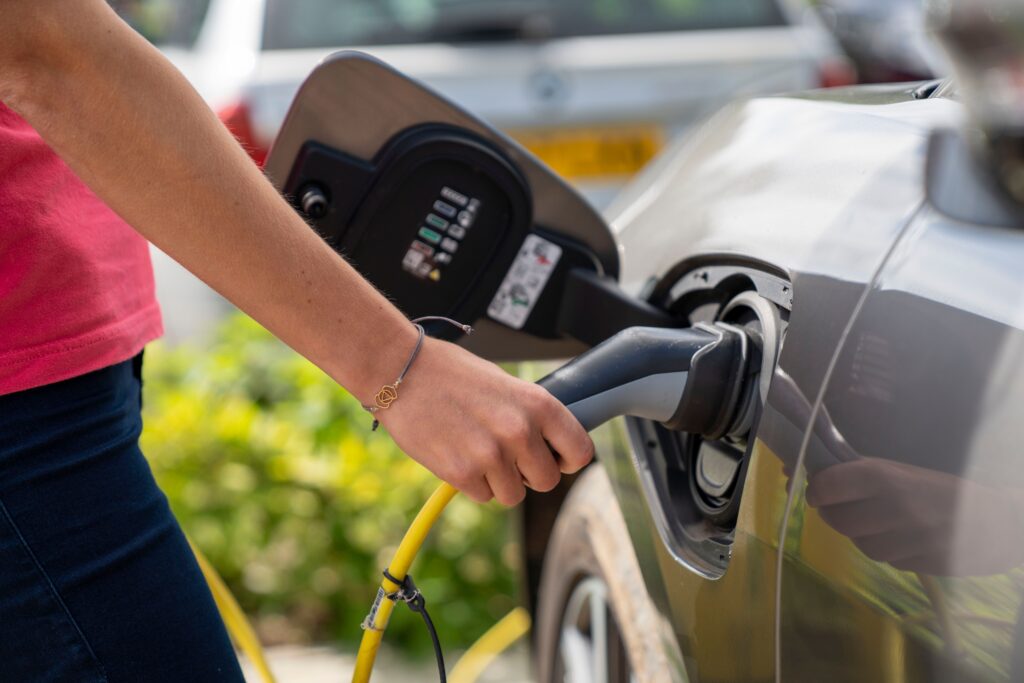
ENERGY TOWERS sees particularly great potential in new construction projects, modern residential districts, and industrial sites. If an ENERGY TOWER system is integrated early on into the overall architectural and energy concept, electricity can be generated and used directly on-site—for example, for cooling, building services, charging infrastructure, or industrial applications.
This creates decentralized energy units that reduce the load on public power grids while simultaneously increasing the resilience of buildings and sites. For project developers, municipalities, and companies, energy self-sufficiency thus becomes a strategic planning factor.
Climate Adaptation Requires New Energy Infrastructure
The increasing summer heat shows that climate adaptation and the energy transition cannot be viewed separately. Buildings must become cooler, production processes more resilient, and power systems more robust. In this context, ENERGY TOWERS positions itself as a technology provider for a new generation of decentralized, weather-independent energy infrastructure.
“The question is no longer whether energy demand will rise due to heat,” says Ballweg. “The question is whether we will meet this demand with outdated structures—or whether we will build the infrastructure now that is suited to a climate-neutral future.”
About ENERGY TOWERS
ENERGY TOWERS is the solution to the energy crisis: sustainable, independent and future-proof. The revolutionary technology enables environmentally friendly power generation directly on site – efficient, modular and independent of fossil fuels, wind or weather. ENERGY TOWERS utilise natural physical processes to convert renewable energy in a weather-independent and resource-saving manner.
The goal: to make clean electricity accessible to all and to create a world in which affordable renewable energy is the norm. With an interdisciplinary team of engineers, scientists and entrepreneurs, ENERGY TOWERS is driving the future of green power generation – for a sustainable and secure power supply worldwide.
More information at energytowers.de/en